
What Is GMAW Welding? A Beginner’s Guide
Whether you’re new to the trade or filling in knowledge gaps, understanding GMAW welding is an essential foundation. Gas Metal Arc Welding, better known as MIG welding, is one of the most widely used welding processes in manufacturing, fabrication, automotive, and construction. At Bernard and Tregaskiss, we’ve spent decades helping welders and operations get the most out of every arc. This guide covers what GMAW is, how it works, the equipment and settings involved, and how it compares to FCAW.
Welding in full PPE with a Bernard and Tregaskiss MIG gun delivers the arc stability and control that makes GMAW the go-to process for beginners and professionals alike.

What Is GMAW Welding?
GMAW stands for Gas Metal Arc Welding, the formal AWS designation for what the industry commonly calls MIG (Metal Inert Gas) welding. In GMAW welding, an electric arc forms between a continuously fed, consumable solid wire electrode and the base metal. The arc melts both the wire and the parent material to form a weld pool; as it solidifies, the metals fuse together. A shielding gas, delivered through the welding gun, protects the molten pool from atmospheric contamination that can introduce porosity or weaken the weld.
The result is a fast, versatile process that supports high deposition rates across a wide range of materials and scales from a single semi-automatic station to a fully robotic welding cell.
Why GMAW Is the Go-To Process for Beginners and Professionals
GMAW has earned its place as one of the most popular welding processes in the world for good reason. Compared to SMAW (stick welding) or GTAW (TIG welding), GMAW offers:
- Ease of learning: The continuous wire feed eliminates the need to manage consumable electrode stubs, making it more forgiving for new welders.
- Speed and productivity: Higher travel speeds and deposition rates mean more weld metal deposited in less time, a key advantage in production environments.
- Minimal post-weld cleanup: With the right shielding gas and technique, MIG welding produces welds with very low spatter and no slag to chip away (unlike stick or FCAW).
- Versatility across materials: GMAW works on mild steel, stainless steel, aluminum, and more, with appropriate wire and gas selections.
- Scalability to automation: GMAW scales readily from semi-automatic to fully robotic applications, making it the backbone of high-volume manufacturing.
Safety Essentials Before You Strike an Arc
No beginner’s guide to GMAW welding is complete without addressing safety. Welding generates intense UV radiation, heat, electrical current, and hazardous fumes. These are manageable with the right PPE and habits, but they demand respect from day one.
Minimum PPE for GMAW
- Welding helmet: Auto-darkening lens, shade #10–12 for GMAW. Never weld without it, UV arc flash causes permanent eye damage.
- Welding gloves: Leather MIG gloves rated for heat and spatter. Wear them every time, and use clean gloves when handling consumables to prevent contamination.
- Flame-resistant clothing: FR jacket or sleeves, no synthetic fabrics. Spatter ignites ordinary cloth instantly.
- Ventilation and fume extraction: GMAW generates manganese-containing fumes. Always weld in a ventilated space; use fume extraction in enclosed areas or high-production environments.
- Work area: Clear flammables within 35 feet of the arc. Keep a fire extinguisher accessible. Never weld on sealed containers or near pressurized materials.

The right PPE — auto-darkening helmet, leather gloves, and FR jacket — is the foundation of safe GMAW welding practice before you ever strike an arc.
How Does GMAW Welding Work? The Process Explained
Understanding what GMAW welding is starts with knowing how the process flows from the power source to the weld pool. Here’s a step-by-step breakdown:
1. Power Source
GMAW uses a constant voltage (CV) DC power source. It maintains a steady voltage while allowing current to vary based on wire feed speed and arc length. This self-regulating behaviour is what makes GMAW more forgiving than constant current processes like GTAW. If arc length changes slightly, the machine compensates automatically.
2. Wire Feed System
A wire feeder drives the solid electrode wire from a spool, through the gun liner, and out the contact tip at a controlled rate. Wire feed speed (WFS) is one of the primary variables controlling heat input and bead characteristics: faster WFS = more current = more heat = deeper penetration. Drive roll selection matters. Use smooth V-groove rolls for solid wire, U-groove or knurled rolls for flux core welding wire.
3. Welding Gun
The welding gun is the welder’s primary interface with the process. It delivers wire, shielding gas, and electrical current to the arc. Gun selection, amperage rating, neck angle, grip design, and cooling type (air vs. water) directly affect welder comfort and productivity. Our complete guide to MIG welding techniques and tips covers gun handling fundamentals in depth.
The Bernard and Tregaskiss Iron Pro MIG gun delivers wire, shielding gas, and electrical current to the arc, making gun selection one of the highest-leverage decisions in any GMAW setup.

4. Contact Tip
The contact tip is where the current transfers from the gun to the wire. A properly sized tip, bore-matched to wire diameter, ensures consistent current transfer and arc stability. An oversized or undersized tip wears faster and degrades performance. Tips for choosing the right contact tip covers material selection, sizing, and duty-cycle matching in detail.
5. Nozzle and Shielding Gas
The nozzle directs shielding gas concentrically around the arc and weld pool to protect it from contamination. Spatter buildup on the nozzle restricts gas flow and leads to porosity. Regular cleaning is non-negotiable. The shielding gas itself, commonly a 75% Ar / 25% CO2 blend (C25) for mild steel, has a significant impact on arc characteristics, spatter, and penetration. See our recommended operating tips for nozzle maintenance guidance.

The Bernard and Tregaskiss TOUGH LOCK nozzle directs shielding gas around the weld pool; keeping it clean and consistent is non-negotiable for porosity-free GMAW results.
Key GMAW Settings Every Welder Should Know
Getting quality results in MIG welding comes down to controlling a handful of interdependent variables:
- Voltage: Controls arc length. Higher voltage = flatter, wider bead. Lower = narrower, more convex. Too low causes stubbing; too high causes spatter. Typical range: 14–22V for short-circuit on thin material, 26–32V for spray on heavier sections.
- Wire feed speed (amperage): Faster WFS = more current = more heat. It’s the primary lever for matching heat input to material thickness. A common starting reference: 0.035″ ER70S-6 on 1/4″ mild steel runs ~250–300 ipm at 22–25V.
- Travel speed: Too fast = narrow bead, poor fusion; too slow = wide bead, risk of burn-through on thin material. Consistency is one of the most practiced fundamentals in GMAW.
- CTWD (contact-tip-to-work distance): Stick-out of 3/8″–3/4″ is standard. Longer stick-out reduces amperage; shorter increases it. See how tip recess affects CTWD and arc stability.
- Gun angle: 10–15° from vertical, 5–15° in direction of travel. Push angle = flatter bead, less penetration; drag angle = deeper penetration, narrower bead.
- Shielding gas flow rate: Typically 25–40 CFH. Too little = porosity; too much = turbulence that pulls in contamination.
GMAW Metal Transfer Modes
How filler metal moves from wire to weld pool, the transfer mode, determines what applications GMAW welding is suited for:
- Short-circuit: Wire touches the pool 90–200 times/second, creating a fast-freezing puddle. Best for thin materials, out-of-position welding, and root passes. The most common mode for beginners.
- Globular: Large, irregular droplets fall by gravity into the pool, more spatter, flat/horizontal positions only. Common with 100% CO2 gas. Lower cost but rougher results.
- Spray: At higher currents with argon-rich gas (80%+ Ar), hundreds of tiny droplets per second are directed axially into the pool. Smooth arc, high deposition, minimal spatter, but limited to flat/horizontal positions.
- Pulsed spray: Alternates peak and background current to achieve one-droplet-per-pulse spray transfer at lower heat inputs. Excellent for thin material, out-of-position work, and aluminum.
GMAW vs. FCAW: What’s the Difference?
FCAW (Flux Core Arc Welding) uses the same welding gun platform as GMAW. The core difference is the wire: GMAW uses a solid wire with external shielding gas; FCAW uses a tubular flux core welding wire, either self-shielded or dual-shielded with external gas. That single difference changes the process in meaningful ways:
| FEATURE | GMAW (solid wire) | FCAW (flux core wire) |
| Sheilding | External shielding gas required. | Self-shielded FCAW handles wind well. |
| Slag | None. No post-weld cleanup. | Slag produced. Must be removed. |
| Outdoor Use | Not ideal. Wind disrupts gas. | Self-shielded FCAW handles wind well. |
| Penetration | Good. Varies by transfer mode. | Deep, suited for thicker carbon steel. |
| Spatter | Low (spray/pulsed especially). | Moderate to high. |
| Best For | Controlled shop, thin to heavy plate. | Structural, heavy fab, outdoor work. |
Many operations run both processes. GMAW for clean indoor work, self-shielded FCAW where shielding gas logistics aren’t practical. Both use the same gun body; the wire and (for dual-shield) gas are what change.
Essential GMAW Equipment
A complete GMAW setup is a system, and each component affects the others. Here’s what matters most:
Power Source and Wire Feeder
A CV DC power source, running DCEP for solid wire GMAW, is standard. For pulsed MIG, you need a machine with built-in pulsing capability. The wire feeder drives wire at a controlled rate, drive roll type, and tension directly affect feed consistency, which in turn affects arc stability and spatter. Inconsistent feeding is one of the most common root causes of birdnesting and arc instability.
Welding Gun and Consumables
The gun is the operator’s primary tool, and the consumables are the wear components closest to the arc. Choosing and maintaining them correctly is one of the highest-leverage decisions in GMAW performance. See MIG Gun Consumables: Tips to Extend Life and GMAW Guns, Consumables and More for full selection guidance.
- Contact tips: Match bore to wire diameter exactly. Standard copper tips suit most semi-automatic work; chrome zirconia tips handle higher duty cycles. A loose tip-to-diffuser connection increases resistance and accelerates wear.
- Nozzle: Brass for lower-amperage work; copper for higher heat. Clean consistently — spatter buildup restricts gas flow and causes coverage failures.
- Gun liner: Use the correct material (steel for solid wire, nylon or Teflon for aluminum) and diameter. Trim to the manufacturer’s specified length. A worn or kinked liner is the most common cause of wire feeding problems.
Shielding Gas
- Mild steel: 75% Ar / 25% CO2 (C25) — the standard blend. 100% CO2 is cheaper but produces more spatter.
- Stainless steel: Tri-mix or 98% Ar / 2% CO2 — minimizes oxidation and preserves corrosion resistance.
- Aluminum: 100% argon — any active gas causes porosity in aluminum.
Welding Wire
ER70S-6 is the go-to for mild steel — higher deoxidizers make it effective over mill scale and light contamination. ER70S-3 is cleaner but demands a cleaner base metal. For stainless, ER308L and ER316L are standard. For aluminum, ER4043 (general purpose) and ER5356 (higher strength) are the most common. Wire diameter follows material thickness: 0.023″–0.030″ for thin gauge, 0.035″ for general work, 0.045″+ for heavy plate.
Common GMAW Problems and Fixes
Most GMAW quality problems trace back to a small number of root causes. For a full diagnostic guide, see Troubleshooting Common GMAW Gun and Consumable Problems. The most frequent issues:
- Excessive spatter: Check voltage balance, contact tip condition, and nozzle cleanliness. Argon-rich gas blends and spray or pulsed transfer significantly reduce spatter versus CO2-heavy setups.
- Porosity: Almost always a shielding gas issue; check flow rate, nozzle condition, hose connections, and base metal cleanliness. Even a minor hose nick causes porosity.
- Burnback: Wire burns to the contact tip, caused by WFS too low relative to voltage, or the tip extending too far from the nozzle. Proper tip recess reduces burnback and extends tip life.
- Birdnesting: Wire tangles at the drive rolls, usually a kinked or worn liner, incorrect drive roll tension, or liner diameter mismatch. Check the liner first.
- Inconsistent arc: Check contact tip bore fit, liner condition, and all electrical connections, including the work lead. Poor conductivity anywhere in the circuit degrades arc stability.
- Undercut: Groove at the weld toe from excessive heat or improper gun angle. Reduce the voltage or WFS, and verify the work angle.
The Right Equipment Makes All the Difference
Understanding what GMAW welding is is the starting point, but consistent, high-quality results depend on the equipment and consumables behind every arc. Every component in the GMAW system, from power source to contact tip, contributes to stability, quality, and productivity. The difference between a frustrating welding experience and a reliably high-performing one often comes down to consumable selection, maintenance habits, and equipment matched to the application.
At Bernard and Tregaskiss, we design semi-automatic MIG guns, robotic welding guns, and the full consumables system to help welders and operations get measurable results, shift after shift. Whether you’re commissioning your first GMAW station or dialling in a high-volume robotic cell, we have the expertise and the equipment to get you there.
Go deeper with these resources:
- MIG Welding Basics: Techniques and Tips for Success
- Tips for Choosing the Right Contact Tip
- MIG Gun Consumables: Tips to Extend Life
- Correct Contact Tip Recess Can Improve Welding Efficiency
- Recommended Operating Tips
- GMAW Guns, Consumables and More — Common Questions Answered
Frequently Asked Questions About GMAW Welding
GMAW stands for Gas Metal Arc Welding, the AWS-standardized formal name for what is commonly called MIG (Metal Inert Gas) welding. GMAW is the designation used in welding codes, procedure specifications, and technical documentation.
Yes. GMAW and MIG welding are the same process. MIG is the common shop name; GMAW is the AWS technical designation. When CO2 is used as the shielding gas rather than a true inert gas, some call it MAG (Metal Active Gas) welding, but it still falls under the GMAW umbrella.
Both use a continuously fed wire electrode and the same gun platform. GMAW uses solid wire with external shielding gas and produces no slag. FCAW uses a tubular flux core welding wire, either self-shielded or dual-shielded, and produces slag that must be removed. Self-shielded FCAW handles outdoor and windy conditions where GMAW gas coverage would fail.
For mild steel, 75% Argon / 25% CO2 (C25) is the standard: good arc stability, low spatter, solid penetration. 100% CO2 costs less but produces more spatter. For stainless steel, use tri-mix or a low-CO2 argon blend. For aluminum, 100% argon is required. Always match shielding gas to wire classification and base metal.
Spatter signals a process that’s out of balance. Check voltage, wire feed speed, contact tip condition, and nozzle cleanliness. Switching to argon-rich gas blends and running spray or pulsed transfer mode reduces spatter significantly. Regular nozzle cleaning and correct contact tip sizing also help.
5 Factors to Consider When Choosing a MIG Welding Gun
5 Factors to Consider When Choosing a MIG Welding Gun

MIG welding is considered one of the easiest welding processes to learn and is useful for a variety of applications and industries. To maximize the benefits this versatile process offers, it is imperative to select the right MIG gun for the job. Choosing the right MIG gun directly affects efficiency, quality and safety — a trifecta every operator is trying to master to create a more comfortable and effective environment. There are five key factors when choosing the right MIG gun for your needs.
Click here to read the full article featured in the March 2024 issue of Fabricating and Metalworking Magazine.
PRODUCT UPDATE – Fume Extraction Neck Assembly Part Number Changes
PRODUCT UPDATE – Fume Extraction Neck Assembly Part Number Changes
Effective immediately, to simplify the ordering process on Bernard® Clean-Air® fume exhaust MIG guns, we have replaced the two parts needed to complete the complete the body assembly and vacuum tube assembly into one fume extraction neck assembly part number as shown in the chart below:
| Description | Fume Extraction Neck Assembly New Part Numbers | Discontinued Vacuum Tube Part Numbers and Body Assembly Part Numbers |
| 45° neck, medium — handle option T | 2390047 | 2390027 + 1040082 |
| 60° neck, medium — handle option T | 2390048 | 2390028 + 1040083 |
| 45° neck, medium — handle option N | 2390049 | 2390029 + 1040084 |
| 60° neck, medium — handle option N | 2390050 | 2390030 + 1040085 |
For questions or more information, contact your local ITW Representative
CONFIGURATOR SIMPLIFICATION: Changes to all automation gun configurators
CONFIGURATOR SIMPLIFICATION: Changes to all automation gun configurators
To continue delivering sustainable value to our customers, we regularly assess our product offering to ensure focus and opportunities to innovate our product portfolio.
Please be advised that, effective May 1, 2024, we are removing all TOUGH LOCK™ consumables and AutoLength pin options from our robotic, fixed automatic and cobot MIG gun configurators.
It is important to note the following:
- “AccuLock™ consumables” and “No consumables” will remain available options where currently available.
- TOUGH LOCK consumables are not being discontinued and can be ordered separately if required.
- No standard duty AccuLock consumable options will be available at this time. If standard duty consumables are required, be sure to configure the gun with the “No consumables” option and order the appropriate standard duty TOUGH LOCK consumables separately.
- Guns previously configured with TOUGH LOCK consumables and/or AutoLength pins will remain available for (re)order – no new TOUGH LOCK and/or AutoLength configurations will be available after May 1, 2024.
- AutoLength pins are not being discontinued and can be ordered separately if required.
Impacted configurators are listed below:
- TOUGH GUN TA3 ThruArm robotic air-cooled guns (TA1xxx)
- TOUGH GUN CA3 robotic air-cooled guns (RA1xxx)
- Tregaskiss 600 amp robotic water-cooled guns (RW16xxx)
- Tregaskiss MA1 fixed automatic air-cooled guns (MA16xxx)
- Tregaskiss MW1 fixed automatic water-cooled guns (MW1xxx)
- Tregaskiss BA1 cobot air-cooled guns (BA1xxx)
If you have further questions or would like more information, please contact your local ITW representative.
PRODUCT UPDATE — NEW ADDITION TO THE BERNARD FCAW SELF SHIELDED GUN PRODUCT OFFERING
PRODUCT UPDATE — NEW ADDITION TO THE BERNARD FCAW SELF-SHIELDED GUN PRODUCT OFFERING


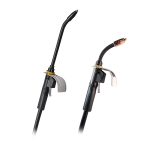
We are proud to announce that effective immediately, a new 450-amp self-shielded FCAW series has been added to the Bernard self-shielded FCAW gun portfolio. The new IronPro™ self-shielded FCAW gun is ergonomically designed to provide excellent access and maneuverability in hard-to-reach weld joints and is ideal for rough use in harsh environments. The IronPro self-shielded FCAW guns also feature AccuLock™ S consumables to keep you welding in tight positions longer, with less contact tip changes and less troubleshooting.
Features and Benefits:
- Features AccuLock™ S consumables
- Choose from two neck sizes for different lengths and bend radii.
- Short handle better accommodates maneuverability for improved joint access.
- Sealed trigger keeps the trigger area slag and spatter free, reducing maintenance.
PRODUCT UPDATE — ACCULOCK™ S CONSUMABLES AND NEW NECK ON XS180 AND XS 260 TGX™ SERIES MIG GUNS
PRODUCT UPDATE — ACCULOCK™ S Consumables and New Neck on XS180 AND XS 260 TGX™ Series MIG Guns
We are pleased to announce that on March 1, 2024, we started offering XS180 and XS260 TGX (10’ and 15’) MIG guns with Bernard neck, silver color (part number 205-60) and AccuLock™ S consumables with Bernard® conventional liner.
MIG Welding FAQ: Best Practices for MIG Success

MIG Welding FAQ: Best Practices for MIG Success
Estimated reading time: 6 minutes
MIG is the most frequently used welding process in general manufacturing and fabrication, thanks to its ease of use, versatility, and productivity benefits.

While MIG is widely used, some operations may still run into issues that require troubleshooting. Understanding the basics of MIG welding and following best practices for operator technique as well as gas and consumable selection can help optimize results with the process.
Q: What are the main advantages of MIG welding?
MIG offers productivity benefits when compared to some other welding processes such as TIG and Stick, thanks to its higher travel speeds and deposition rates. MIG is also considered easier for new welders to learn, so it can be a good option for operations that struggle to find skilled welders.
MIG could be utilized with either solid filler wires or tubular wires such as Metal Cored and when used with Flux Cored wires it is referred to as Flux Cored welding. Tubular wires in general can be run at higher speeds and deposit more weld metal, so they even offer higher productivity gains than Solid wires.
Q: What are the differences between MIG and TIG welding?
There are many factors to consider when choosing the right welding process for your application. These include base material type and thickness, weld appearance requirements, productivity requirements, the welding environment and available skilled labor.
TIG welding is generally used in niche applications, such as those that require high-precision welds or extremely high aesthetic quality. TIG is frequently used with special-grade materials like titanium or stainless steel. In comparison, MIG can be used in higher production applications where increased throughput is important, and it’s a good option for a wide variety of metals.
A typical travel speed in TIG welding is 4-6 inches per minute. With MIG welding, travel speeds are much higher; 6 inches per minute are considered slow, and 15 to 20 inches per minute are common. Deposition rates are also much higher with MIG welding.
Regarding training, TIG is considered the most difficult welding process to learn and master since it uses both hands. An operator may take a few months to become proficient in TIG, while a new welder could be proficient in MIG within a week or two.
Q: What is the right shielding gas for MIG welding?
Shielding gas plays an important role in determining weld penetration profiles, arc stability, mechanical properties of the finished weld, the transfer process you use and more.
The filler metal manufacturer often provides shielding gas recommendations for the type of wire being used, so it’s a good idea to first consult the wire specification sheet.
When using flux-cored wire, 100% CO2 or an 80/20 Argon/CO2 mix are common choices. When it comes to solid wire or metal-cored wire, the right gas is dependent on the transfer mode being used. A short-circuit transfer mode works with 100% CO2 gas in most cases but can still run on mixed gas. While using a pulse or spray transfer, a higher Argon content is needed, and an 80/20 Argon/CO2 is the right choice.
The base material also plays a role in choosing the right gas. Aluminum requires 100% argon, while stainless steel requires at least 98% argon.
Q: Which is better: a push or a pull technique?
The technique choice may come down to operator preference in most cases, but there are some best practices. For example, when welding aluminum, a push angle is generally better because it helps the cleaning action of the oxidation layer on aluminum, similarly uphill position, a push angle is good for visibility and penetration. While if you use Flux Cored wire to weld carbon steel then a pull angle is going to work better in this case to give enough time to the slag not to be entrapped in the weld metal.
Q: What is the proper wire stick-out?
Maintaining a proper stick-out is important to achieving the best results in MIG welding, a too-long or a too-short stick-out will affect the weld quality and appearance. A 3/8-inch stick-out is a good starting point, but operators can deviate from that based on preference, wire diameter and accessibility to the weld.
Q: What amperage MIG welding gun is needed?
To choose the right MIG welding gun, consider the specifics of the application. The wire feed speed and wire diameter are two of the most important factors in determining proper gun amperage. Are you welding heavy wall materials, like heavy equipment or heavy steel structures? Those jobs will likely require a high deposition, hence a high-amperage welding gun — such as an Air-cooled 400-amp gun with at least a 60%-80% duty cycle or above, and in some cases a water-cooled gun. If you weld lighter walls and shorter beads, you may consider a 200 to 300-amp gun.

The most common amperage choice in the industry is a 300- to 400-amp, air-cooled MIG gun. This gun can address the majority of the MIG welding applications and can run the most common wire sizes such as 0.045” and 0.052”.
A good starting point would also be the welding procedure in place that specifies the amperage needed for the weld, which would help in choosing the gun’s amperage. Another easy way is to match the welding machine amperage output, a 400-amp welder would run well with a 400-amp gun in most cases, but this might not be the most effective way to select the right amperage gun when compared to the other methods mentioned above.
Q: How can an operation make consumables last longer?
Using the OEM consumables designed to be used with a specific MIG gun and welding system is important. Because these consumables are machined to very tight tolerances and go through high-quality measures which in turn is translated into higher quality welds and longer consumable life.
Be sure to choose a contact tip that is the appropriate size for the wire diameter — an oversized or undersized contact tip will wear faster and result in poor performance. In addition, follow the gun manufacturer’s recommendations for consumable installation and changeover, check connections regularly, install and trim to the right length, select the right nozzle material, size and recess/extension, and finally clean your consumables regularly and change them when needed.
Written by Mostafa Hanafy (mostafa.hanafy@tregaskiss.com) , Market Segment Manager, Tregaskiss and Bernard. Republished with permission from Fabricating and Metalworking (August 2023).
PRODUCT UPDATE – Tregaskiss TOUGH GUN® TT4 Reamer Robotic Nozzle Cleaning Station Online Configurator and Reverse Lookup Tools
PRODUCT UPDATE – Tregaskiss TOUGH GUN® TT4 Reamer Robotic Nozzle Cleaning Station Online Configurator and Reverse Lookup Tools
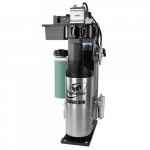
Tregaskiss introduces a new online configurator for its TOUGH GUN® TT4 reamer robotic nozzle cleaning stations. The new mobile-friendly configurator allows users to quickly and easily customize their analog or ethernet reamer for their exact application. Users simply follow a series of steps to configure a reamer model, first selecting the V-block and cutter blade to match the outside diameter (OD) and bore of their robotic MIG gun nozzle. Users can then select from various add-ons, including a wire cutter or nozzle detect. Tregaskiss also offers the option to choose accessories sold separately, such as a reamer stand, anti-spatter liquid and an anti-spatter multi-feed system.
After choosing all desired components, the configurator provides a summary of the selections, along with a part number for the reamer. Users can access downloadable replacement parts lists, exploded view diagrams and other valuable takeaways that they can print, save in PDF format for later, or share via email.
Along with the online configurator, a new reverse part number lookup function for Tregaskiss TOUGH GUN® TT4 reamer robotic nozzle cleaning stations is available. By entering a fully configured TOUGH GUN TT4 reamer part number, users get access to a downloadable detailed replacement parts list and other relevant resources specific to their configuration.
Users can visit Tregaskiss.com/ConfigureMyGun to utilize this online configurator or reverse lookup function.


PRODUCT CHANGE — CONE NUT AND END FITTING
PRODUCT CHANGE — CONE NUT AND END FITTING ON BERNARD® BTB MIG STRAIGHT HANDLE MIG GUNS WITH HYTREL® POLYMER CABLE — EFFECTIVE JANUARY 3, 2023
Our product offering is regularly assessed to ensure focus on customer needs and opportunities to innovate our product portfolio, so we can continue to deliver sustainable value to our customers.
Starting 1/3/2023, there will be part number changes to the cone nut/end fitting found on Bernard BTB straight handle MIG guns with Hytrel polymer cable. Note that although the parts will look different, the functionality remains the same. These part number changes are also reflected in the current BTB MIG Gun Owners Manual.

| Current Part Number | New Part Number | Type |
| 308 | 1680087 | End Fitting |
| 408T | 1680088 | End Fitting |
| 409 | 1540003 | Cone Nut |
| 509 | 1540004 | Cone Nut |
| 608-1 | 1680089 | End Fitting |
| 609 | 1540004 | Cone Nut |
Should you have any questions or need further assistance, please contact your local ITW representative.